Your child’s assessment, strengths, goals, and authorized level of care guide the services in their plan. Not every child needs every service. We explain what is recommended, who will provide it, and how the team will work together.
Case management
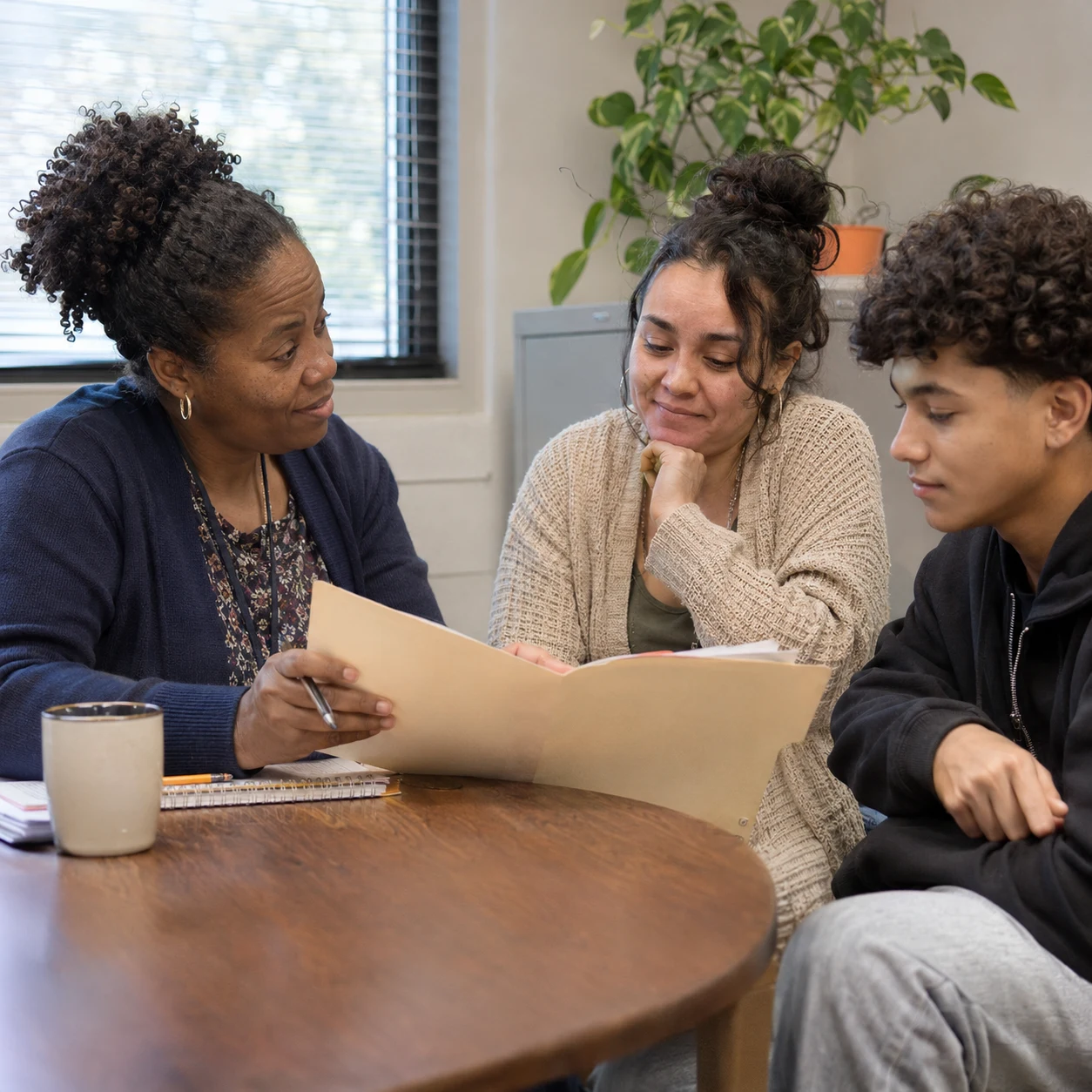
A case manager helps you identify needs, connect with services and resources, and follow up so the care plan stays useful. With your permission, this may include coordinating with your child’s school, therapist, medical providers, and other supports.
What this can look like: helping arrange a referral, addressing barriers to appointments, bringing the right people together, or checking whether services are meeting your child’s needs.

Mental health rehabilitation and skills training
Rehabilitation helps a child develop or regain everyday skills affected by emotional or behavioral difficulties. Skills training turns that goal into hands-on practice, such as recognizing strong feelings, calming the body, solving problems, communicating needs, or following a manageable routine.
What this can look like: practicing how to ask for a break before an argument escalates, then helping caregivers support that skill at home. Caregiver training may be included when it supports the child’s care plan.

Medication management
When medication is recommended, a qualified prescribing clinician evaluates whether it may help, discusses benefits and risks, and monitors symptoms, side effects, and the treatment response. Prescribing and medication changes are handled by that licensed medical provider.
How case management helps: coordinating access and follow-up with the prescriber. Medication training and support can help families understand instructions, track concerns, and prepare questions. It does not replace medical evaluation or authorize case managers to prescribe.